
Care
“You matter. Your dignity stays intact with me.”
Care lowers the sense of threat and makes honest conversation easier. Without it, help becomes correction and insight becomes a blade.
The illustrated field guide
The idea in one minute
01:00Help without disappearing.
Receive support without shame.
Build capacity together.
Your time, energy, and dreams belong in the care plan, too. A field guide to clearer asks, smaller honest offers, and a life with room for other people — and for you.
The Helper System
The right kind of support protects dignity and widens what becomes possible.
Why it exists
Help is not soft.
Help is load-bearing.
Help is how humans survive complexity.
Almost nobody is self-made. People are held together by visible and invisible networks — family, friends, neighbors, mentors, and the one person willing to say the honest thing with care. The Helper System treats that web as infrastructure: something you can practice, repair, and build on purpose.
“We build better nets, then we invite people to help hold them.”
The idea, made visible
Visual guide · 01
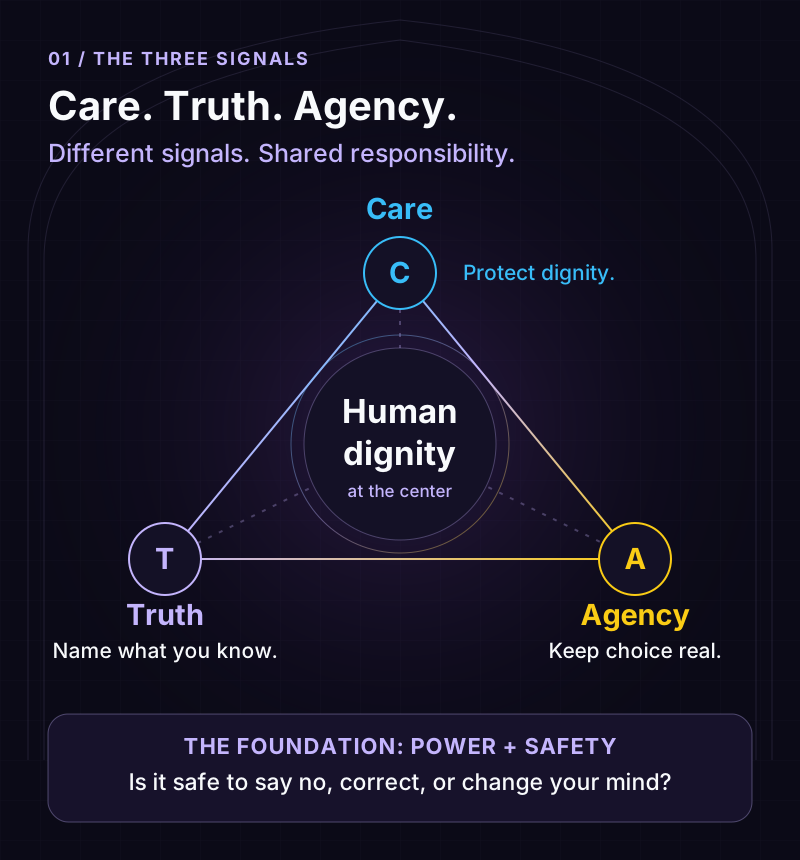
Care keeps truth humane. Truth keeps care honest. Agency keeps help participatory. Power and safety shape whether all three can be practiced freely.
Care protects dignity. Truth names what is known and what is uncertain. Agency protects meaningful choice, including the right to say no. All three depend on power and safety: can someone refuse, correct, or change their mind without risking what matters?
Visual guide · 02
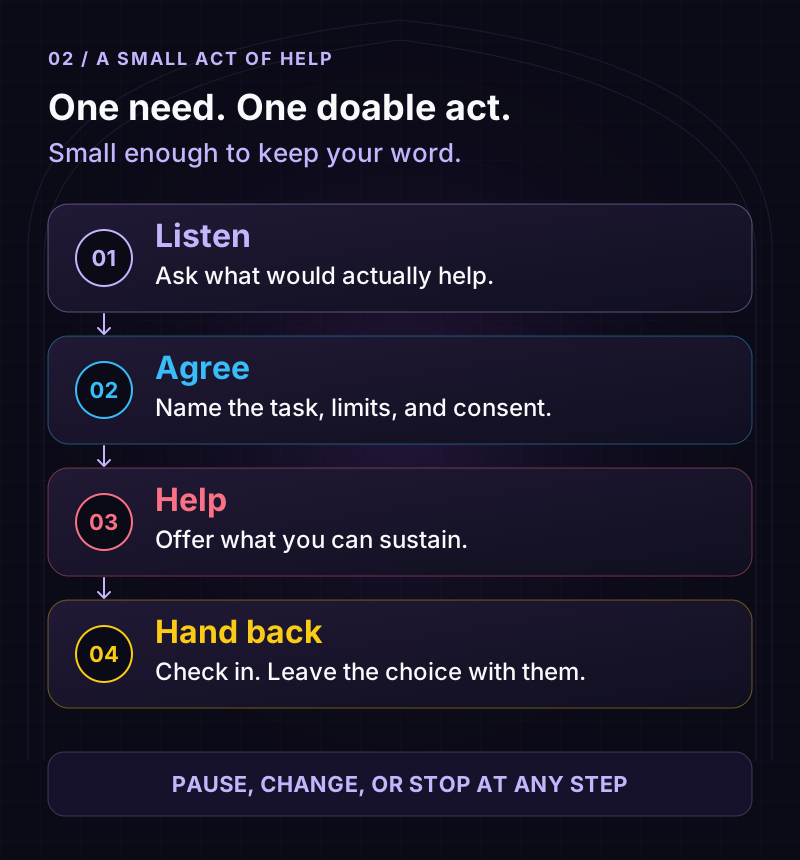
For example: ask whether a grocery run would help, agree on the list and a time, make the delivery, then check that it met the need. A small promise with clear limits.
1. Listen: ask what would actually help. 2. Agree: name the task, limits, and consent. 3. Help: offer what you can sustain. 4. Hand back: check in and leave the choice with the person. Anyone can pause, change, or stop the plan. If refusal is unsafe or the stakes are high, bring in qualified human support.
The three signals
“You matter. Your dignity stays intact with me.”
Care lowers the sense of threat and makes honest conversation easier. Without it, help becomes correction and insight becomes a blade.
“Let's name what we know and what we do not.”
Truth separates what was observed from what was assumed, and invites correction. Without it, comfort becomes avoidance.
“Asking for help does not require giving up your steering wheel.”
Agency means having meaningful say in what happens next — including the right to say no, pause, or ask for a different kind of help.
Care keeps truth humane. Truth keeps care honest. Agency keeps help participatory. Power and safety determine whether all three can be practiced freely.
In sixty seconds
The short version
Ask what help is wanted. Protect dignity. Tell the truth carefully. Share the load. Respect limits. Know when informal help is not enough.
The shadow
Every powerful idea has a shadow, and the shadow of helping is rescuing — care that looks like love while carrying control. Real help protects voice, choice, dignity, and the right to shape or stop support. Dependence is not the enemy. Coercive, isolating, or unaccountable dependence is.
The power test
Can this person say no, change their mind, or correct me without risking anything that matters? If not, the person with more power carries extra responsibility.
The helper roles
Listens without rushing to fix. Helps someone feel less alone beside an unfinished thing.
Offers clearer language, not a diagnosis — and lets the person correct the translation.
Brings steadiness without forcing one particular way to calm down.
Describes an observable pattern, asks before interpreting, and leaves room to be wrong.
Turns a hard moment into usable structure: a meal, a ride, a checklist, a next step.
Restores play, humor, and possibility when those are welcome.
Connects a private struggle to a shared condition — and helps people act together without taking over.
AI's place in this
AI can help a person draft what they are trying to say, label uncertainty, or organize options. It cannot replace human care, consent, judgment, or accountability. Every output is a draft, not evidence. And the system must also work with paper, a phone call, or a trusted human: no one should have to use AI to receive care.
AI can help organize the room. It should never own the room.
Scope
The Helper System is a peer-support field guide for everyday reflection, communication, and boundary-setting. It is not therapy, medical or legal advice, crisis management, or proof about another person. A helper — human or AI — should not manage danger alone.
Needs are not engagement.
People are not tickets in a queue.
If you or someone you know may be unsafe, contact qualified local crisis, medical, legal, or safety support. In the United States, call or text 988 for crisis support. When safety is uncertain, choose a human handoff.
How it adds up
One honest conversation.
One hard day made less lonely.
One clearly stated limit.
One useful hand at the right time.
One ridiculous song at exactly the right time.
This is how a more caring world is built.
Beepy Bombs
Press play